This post is not directly about work with PLC or Iraq, but it is certainly related. I hope you will read it and if you have thoughts about it I would love to hear them- comment or email me at alex@preemptivelove.org
--
Finishing exams for the year means, among other things, that I can finally start reading books of my choosing. Today I started (started again would be more accurate) Women, Poverty and AIDS: Sex, Drugs and Structural Violence. I made it to page ten, sitting in a cozy and trendy coffee shop in Atlanta drinking a $3 soy latte, when I leaned back in my chair and actually thought about what I was reading.
The story of "Darlene" occupies about three pages in the book. Those three pages contain more suffering and struggle than I will ever be able to truly understand. As I looked back at my cute red reading journal with the picture of a kitty on the cover and little paw prints lining each page, I realized I had reduced Darlene's already condensed three pages into a few bullet points:
"Darlene"
-African American woman from Harlem (b. 1955)
-Mother of 4
-Stepbrother, Stepfather, Husband all die within a year (HIV/AIDS related infections)
-Two friends (her children's godparents) die in same year (HIV/AIDS related infections)
-Three oldest children taken into foster care so she can try to care for her youngest who is very ill (suspected HIV/AIDS)
-Youngest child dies (still same year). Her words: "He was three years old. It took him six months to die."
-Becomes addicted to crack, hits "rock bottom," homeless. Later enrolls herself in a detoxification program and is diagnosed with AIDS.
Now about this point is where I would plan to say "I'm not writing this to try and make anyone feel depressed or break everyones heart" ...but maybe I am. Perhaps we need to have our hearts broken more often. You (or I if I were reading this) might say: "We all know the world has suffering and sadness and that AIDS, Congenital Heart Disease, etc. are terrible." Certainly we do. But do we know these things are terrible because we know that 40+ million people worldwide have HIV/AIDS or that thousands of children are stuck waiting in line for life saving heart surgery in Iraq, or do we know that these things are terrible because we realize that every single one of those people, every single one of those kids, their families, their friends, have a different story of suffering and struggle?
The vast majority of these people don't and will never have even a few bullet points, let alone three still insufficient pages in an anthropological volume. They are reduced to being part of an aggregate statistic. Their story, feelings, and trials are not even a number, they are part of a number. More than forty million unique, heart breaking narratives of unique, invaluable human beings become "40+ million people worldwide have HIV/AIDS."
Please understand that I am not speaking ill of health statistics, they are extremely useful and necessary, what I am wondering is what the lives of all of us who "know about" and hate this suffering would look like if whenever we saw these statistics we thought about the individual people behind them- their stories, their feelings, their families, their lives. And to take it one step further, what if we viewed these people as our own friends, brothers, sisters, mothers, or children? I suspect there would be much more willingness, and much more urgency to help those that we know are suffering.
Now I know that I certainly can't, and I don't imagine that any person living today can truly comprehend worldwide suffering of billions on the individual level. Even trying to can become overwhelming very quick. So what do we do then? I think that is a question everyone has to answer for themselves- but I do have a suggestion: Start by trying to understand the struggles and suffering faced by one or a few individuals, and try to really
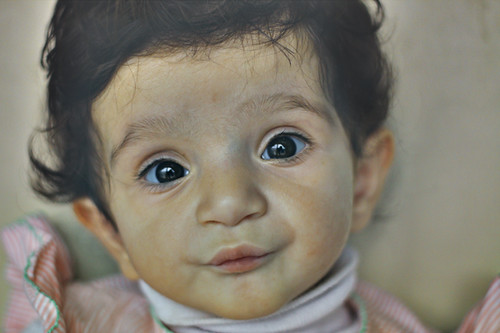
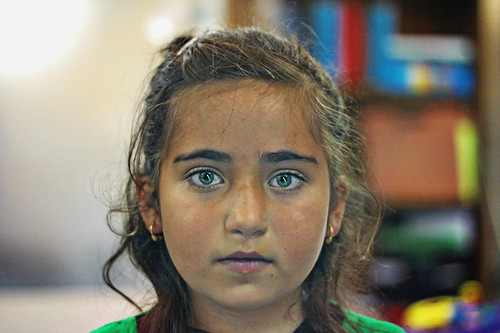
love them as yourself. There are myriad opportunities for this: consider Lawen and Nivar, two kids in Iraq who need surgery to fix their hearts.
Lawen
Nivar
You can read about Lawen and Nivar, as well as the many other children PLC works with, on the
Preemptive Love Coalition Blog. You can support and love these kids by helping fund life-saving heart surgery for them in Iraq.
Another great organization is Partners in Health. Here is their vision, copied from the PIH website:
The PIH Vision: Whatever it takes
At its root, our mission is both medical and moral. It is based on solidarity, rather than charity alone. When a person in Peru, or Siberia, or rural Haiti falls ill, PIH uses all of the means at our disposal to make them well—from pressuring drug manufacturers, to lobbying policy makers, to providing medical care and social services. Whatever it takes. Just as we would do if a member of our own family—or we ourselves—were ill.
The founder of Partners in Health, Dr. Paul Farmer, is one of the editors and authors of the book-Women, Poverty and AIDS-that tells Darlene's story. Speaking again of Darlene, my thoughts tonight interrupted me from writing the last bullet in my journal. I have since added it, and it reads:
"-Now visits her 2 children who live near her every day, and son who lives in New Jersey every week."
The final sentences of Darlene's story in Women, Poverty, and AIDS read:
"She says she'll see them this way until she dies. She only hopes she doesn't linger."